
For students, finding a job that fits around classes can be difficult. Waiter jobs can offer flexible shifts, practical work experience, and a way to earn money while studying. However, the real value depends on the country, city, employer, working hours, taxes, and cost of living.
Europe also has major differences in wages. For example, 2026 national minimum wages range from €620 per month in Bulgaria to €2,704 in Luxembourg among EU countries with national minimum wages. Therefore, a waiter in one European country may have a very different income and living-cost situation from a waiter doing similar work elsewhere.
How Much Do Waiters Earn in Europe?
There is no single European salary for waiters. Pay depends on the country, restaurant, experience, working hours, age, contract, collective agreement, and tips.
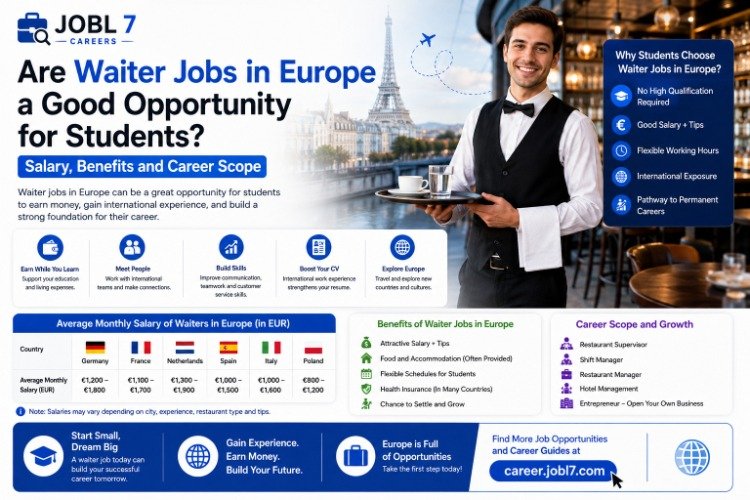
Recent hospitality salary data gives the following indicative gross salary ranges for experienced or standard waiter positions:
Country Indicative Waiter Salary Tips
Germany €2,400–€3,000/month Often additional
France €2,200–€2,800/month May be additional
Spain €1,700–€2,300/month May be additional
Netherlands Varies by age, contract and hospitality agreement May be additional
Ireland Varies by age and employment arrangement May be additional
Portugal Generally lower than northern European markets May be additional
These are not guaranteed salaries. Actual waiter pay can be higher or lower depending on the employer and contract. A 2026 hospitality employment source, for example, reports indicative gross waiter salaries of €2,400–€3,000 in Germany, €2,200–€2,800 in France, and €1,700–€2,300 in Spain.
Minimum-wage data can also provide useful context, but it should not be confused with the salary of an individual waiter. In January 2026, national minimum wages were above €1,500 per month in Germany, France, the Netherlands, Ireland, Belgium, and Luxembourg.
Waiter Salary for Students
Students usually work fewer hours than full-time employees, so monthly earnings are naturally lower.
For example, a student working 15–20 hours per week may earn substantially less per month than someone working 35–40 hours. However, part-time work can still provide useful income while leaving time for classes and studying.
Age can also affect minimum pay in some countries. Ireland, for example, has age-based national minimum wage rates. From January 2026, the rate is €14.15 per hour for workers aged 20 and older, with lower statutory rates for younger workers.
The Netherlands also has specific hospitality pay arrangements. Its hospitality collective agreement lists minimum gross amounts for non-skilled workers and BBL students, with different rates depending on age.
Why Waiter Jobs Can Be Good for Students
Flexible Working Hours
One of the biggest advantages is flexibility.
Restaurants, cafés, hotels, and bars often operate during evenings and weekends. Therefore, students may be able to choose shifts that fit around their class schedules.
Part-time, temporary, seasonal, and weekend positions can be especially useful for students.
Extra Income From Tips
Tips can increase a waiter’s total earnings, although they should not be treated as guaranteed income.
The amount depends heavily on the restaurant, customer culture, service quality, location, and local tipping practices. Therefore, students should evaluate the guaranteed wage separately from potential tips.
Valuable Work Experience
A waiter job can provide more than short-term income.
Students can develop skills such as:
Customer service
Communication
Teamwork
Time management
Problem solving
Cash handling
Working under pressure
Basic hospitality operations
These skills can be useful when applying for future hospitality, tourism, retail, customer-service, or management positions.
What Benefits Can Students Get?
Benefits depend on the country and employment contract.
A legitimate employment arrangement may provide rights relating to:
Minimum wage
Paid leave
Working hours
Rest periods
Social insurance
Overtime
Employment protections
However, these rules differ across countries and contracts. Students should always check the employment terms before accepting a job.
For example, Germany’s statutory minimum wage is €13.90 gross per hour from January 2026, and the rule applies regardless of whether employment is full-time or part-time, subject to specific legal exceptions.
What Skills Do You Need to Become a Waiter?
A university degree is usually not the main requirement for entry-level waiter work.
Employers commonly value:
Good communication
A friendly and professional attitude
Basic customer-service skills
Reliability
Ability to work in a team
Physical stamina
Basic numeracy
Clean and professional presentation
Language skills can be particularly valuable.
In tourist areas, speaking English plus the local language can improve communication with customers and employers. Additional languages may also be useful in international hotels and restaurants.
Career Scope After Starting as a Waiter
A waiter position does not have to remain an entry-level job.
With experience, a worker may progress toward roles such as:
Waiter → Senior Waiter → Head Waiter → Restaurant Supervisor → Restaurant Manager
Other possible paths include hotel food-and-beverage operations, event catering, hospitality management, or specialized service roles.
For students studying hospitality, tourism, business, or hotel management, restaurant experience can also provide practical exposure to the industry.
Which European Countries Can Be Attractive for Waiter Jobs?
There is no single “best” country for every student.
Germany, France, the Netherlands, Ireland, Spain, Portugal, Italy, and other European markets all have hospitality sectors, but wages and living costs vary significantly.
For example, high nominal wages do not automatically mean higher savings. Housing, transportation, food, taxes, and other expenses can reduce the amount a student actually keeps.
Therefore, compare net income and living costs, not salary alone.
What Should Students Check Before Accepting a Job?
Before accepting a waiter position, check:
Gross hourly or monthly pay
Expected working hours
Overtime rules
Tips and how they are distributed
Contract type
Tax and social contributions
Accommodation costs
Transportation
Meal arrangements
Required language skills
Work authorization
Schedule flexibility
This is particularly important for international students. Immigration and work-permission rules can vary by country and by student status.
Frequently Asked Questions
Is waiter work good for international students in Europe?
It can be a useful option because part-time and shift-based work may fit around studies. However, students should first confirm that their residence or student status allows the intended employment.
How much does a waiter earn per month in Europe?
There is no standard European salary. Indicative gross waiter salaries can range from around €1,700 to €3,000 or more in some major markets, while student earnings will usually be lower when working fewer hours.
Can students work as waiters part-time?
Yes, part-time hospitality work is available in many European markets. However, the number of hours a student can legally work depends on their country, immigration status, and employment rules.
Do waiters get tips in Europe?
Tips can be available, but practices differ significantly between countries and restaurants. Students should consider tips as potential additional income rather than guaranteed salary.
Can waiter jobs lead to a career?
Yes. With experience, a waiter can move into senior service, supervisory, restaurant management, hotel, catering, or broader hospitality roles.