
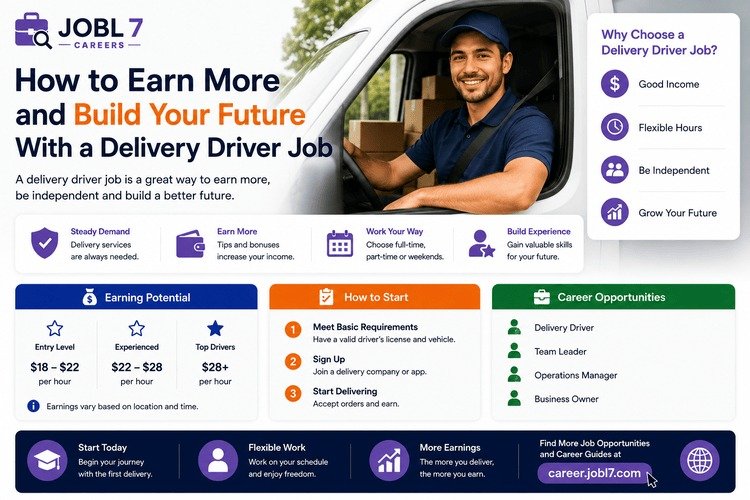
A delivery driver job can be a flexible way to earn money while building valuable work experience. Depending on the employer, drivers may deliver food, packages, groceries, medical supplies, or other products. Some positions are part-time, while others offer full-time schedules and employee benefits.
However, earning more is not simply about making more deliveries. Fuel, vehicle maintenance, insurance, unpaid driving time, traffic, and vehicle depreciation can reduce your actual income. Therefore, drivers who want to build a stronger financial future should focus on net earnings, reliable work, benefits, and career growth.
How Much Can a Delivery Driver Make?
Delivery driver pay varies by employer, location, vehicle type, schedule, experience, and the type of deliveries involved. Employees may receive an hourly wage or salary, while some delivery roles also include overtime, bonuses, tips, or other incentives.
For example, the U.S. Bureau of Labor Statistics reported a $42,770 median annual wage for light truck drivers in May 2024. Delivery jobs can fall into different occupational categories, so this figure should not be treated as a universal delivery-driver salary.
Example Delivery Driver Earnings
Work Schedule Example Hourly Pay Approx. Gross Weekly Pay Approx. Gross Monthly Pay
Part-time $17/hour $340 $1,473
Regular part-time $20/hour $600 $2,600
Full-time $22/hour $880 $3,813
Higher-paid role $25/hour $1,000 $4,333
Examples assume 20, 30, or 40 hours per week where applicable. They are illustrations, not guaranteed salaries.
Your actual take-home income will depend on taxes, hours, overtime, tips, bonuses, vehicle costs, and employer benefits.
Choose the Right Delivery Driver Job
Not every delivery job provides the same earning potential.
Common opportunities include:
Package delivery
Food delivery
Grocery delivery
Medical supply delivery
Pharmacy delivery
Local courier work
Restaurant delivery
Retail delivery
Commercial driving
Route delivery
An employee position may offer predictable wages and benefits. Independent delivery work may provide more scheduling flexibility but can leave you responsible for vehicle expenses and other business costs.
Therefore, compare the total compensation package, not just the advertised hourly rate.
How to Increase Your Delivery Driver Income
One of the best ways to improve earnings is to become more selective about the work you accept.
For example, a delivery position with a slightly lower hourly rate may be more valuable if it provides paid mileage, health insurance, paid time off, retirement benefits, or consistent hours.
Meanwhile, positions that require specialized driving, longer routes, commercial vehicles, or additional responsibilities may offer higher compensation.
You can also improve your earning potential by:
Building a strong driving record
Learning efficient route planning
Developing customer-service skills
Maintaining your vehicle
Becoming reliable and punctual
Taking additional training
Looking for overtime opportunities
Applying for higher-level driving positions
Reduce Your Delivery Expenses
Gross income does not equal profit.
If you use your own vehicle, common expenses can include:
Fuel
Oil changes
Tires
Repairs
Vehicle depreciation
Insurance
Parking
Tolls
Cleaning
For this reason, keep a simple record of your income and work-related expenses.
Metric What to Track
Gross earnings Wages, tips, bonuses
Hours worked Regular and overtime hours
Miles driven Work-related mileage
Fuel Weekly fuel costs
Vehicle costs Maintenance and repairs
Net income Money remaining after expenses
After several weeks, you can see which jobs and schedules provide the best financial results.
Build a Strong Professional Reputation
Reliability is important in delivery work because customers and employers depend on drivers to complete routes on time.
Simple habits can help you stand out:
Arrive on time.
Follow delivery instructions.
Drive safely.
Communicate professionally.
Keep your vehicle clean.
Protect customer information.
Handle packages carefully.
Report problems quickly.
A strong work record can make it easier to apply for better positions later.
Get Training and Upgrade Your Driving Skills
A delivery driver job can also be a starting point for developing transportation skills.
Depending on the type of work you want, you may eventually pursue additional licenses, employer training, or specialized driving qualifications.
For example, some transportation careers require a Commercial Driver’s License (CDL). Moving into CDL-related work can open a different group of driving opportunities, although requirements depend on the vehicle and job.
The important point is to think beyond your first driving position. Ask yourself what qualification or skill could help you qualify for a better job in the next one to three years.
Can a Delivery Driver Job Become a Career?
Yes. Delivery work can become part of a longer transportation or logistics career.
A possible progression could look like:
Delivery Driver → Experienced Driver → Route Driver → Specialized Driver → CDL Driver → Driver Trainer or Transportation Supervisor
Not every employer offers this exact path. However, experience with routes, customer service, vehicle safety, scheduling, and logistics can help workers pursue related positions.
Some drivers may eventually move into dispatch, fleet operations, logistics coordination, or management.
Employee Job vs. Independent Delivery Work
Before choosing a delivery opportunity, understand how you will be classified.
An employee may receive benefits such as:
Health insurance
Paid time off
Retirement plans
Workers’ compensation
Overtime when applicable
Paid training
Independent contractors may have more flexibility, but they may also be responsible for expenses and tax obligations that an employee does not handle in the same way.
Therefore, compare the complete financial picture before deciding.
How to Build Your Future With Delivery Work
A delivery driver job can be more valuable when you use it as a stepping stone rather than only as a source of immediate income.
Start by tracking your earnings and expenses. Next, build a reliable work record and identify the skills employers value. After that, consider additional qualifications that can move you into higher-paying transportation or logistics roles.
Most importantly, avoid judging a job by its hourly rate alone. A stable schedule, benefits, training, advancement opportunities, and manageable operating costs can make a major difference to your long-term financial future.
Frequently Asked Questions
How can delivery drivers earn more money?
Drivers can potentially increase their income by finding higher-paying positions, working eligible overtime, improving efficiency, reducing unnecessary vehicle expenses, gaining additional qualifications, and moving into specialized driving roles.
How much does a delivery driver make per month?
Monthly income varies by pay rate and schedule. For example, a $22-per-hour driver working 40 hours per week would earn approximately $3,813 in gross monthly pay before taxes and other deductions. Actual earnings can differ.
Is delivery driving a good career?
It can be a useful career starting point for people interested in transportation and logistics. Drivers can gain experience and potentially move into specialized driving, CDL positions, dispatch, fleet operations, or supervisory roles.
Is it better to work for a company or deliver independently?
Neither option is automatically better. Company employment may provide more predictable income and benefits, while independent work can provide greater flexibility. Compare net income, expenses, taxes, insurance, and benefits before choosing.
How can delivery drivers reduce expenses?
Drivers can monitor fuel consumption, maintain their vehicles, reduce unnecessary mileage, plan efficient routes, and keep accurate records of work-related expenses.