
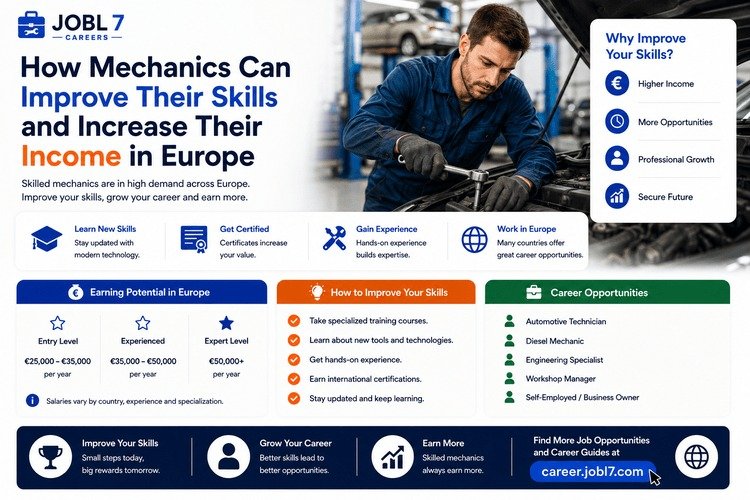
Working as a mechanic in Europe can offer opportunities for stable employment, better skills, and higher income. However, earnings can vary widely depending on the country, experience, specialization, employer, and type of vehicle you work on.
Mechanics who want to increase their income should look beyond basic repair work. Learning modern vehicle technology, gaining recognized qualifications, choosing a strong specialization, and targeting better-paying employers can help build a stronger career.
Understand How Mechanic Salaries Work in Europe
There is no single salary for mechanics across Europe. Pay depends on the local labor market and the type of work you perform.
A mechanic’s income may be influenced by:
Country and city
Years of experience
Automotive specialization
Employer
Certifications and qualifications
Type of vehicles serviced
Working hours
Overtime
Technical skills
Language ability
Level of responsibility
For example, a general automotive mechanic and a technician who specializes in advanced vehicle systems may have very different earning potential.
Illustrative Monthly Salary Ranges
The following figures are general illustrative ranges, not guaranteed salaries. Actual pay can vary significantly between countries and employers.
Experience Level Illustrative Monthly Gross Pay
Entry-Level Mechanic €1,500–€2,200
Experienced Mechanic €2,000–€3,200
Specialized Technician €2,500–€4,000+
Senior / Diagnostic Technician €3,000–€4,500+
These amounts should not be treated as a Europe-wide salary standard. Taxes, social contributions, overtime, bonuses, housing costs, and currency differences can also affect the final amount a worker takes home.
Develop Modern Automotive Skills
Vehicle technology is changing quickly. Modern mechanics may need to understand much more than engines, brakes, and suspension systems.
Useful skills can include:
Computerized vehicle diagnostics
Electronic systems
Engine management
Automatic transmissions
Air-conditioning systems
Advanced driver-assistance systems
Hybrid vehicle technology
Electric vehicle systems
Battery technology
Vehicle software and diagnostic equipment
As a result, mechanics who continue learning can become more valuable to employers.
For example, a technician who can diagnose an electronic fault may be able to handle work that a basic repair technician cannot.
Choose a High-Value Specialization
Specialization can be another way to improve earning potential.
Instead of remaining a general mechanic throughout your career, consider developing expertise in an area with strong demand.
Possible areas include:
Electric vehicles
Hybrid vehicles
Diesel systems
Heavy vehicles
Commercial trucks
Fleet maintenance
Vehicle diagnostics
Automotive electronics
Performance vehicles
Agricultural machinery
The best specialization depends on the country and local demand. Therefore, research employers and job listings in your target area before investing heavily in a specific training path.
Build Recognized Qualifications
Qualifications can make it easier to demonstrate your technical ability to employers.
Depending on the country and occupation, mechanics may need vocational training, apprenticeships, professional certificates, or other recognized credentials.
In addition, employers may value manufacturer-specific training and experience with professional diagnostic equipment.
Before moving to another European country, check whether your existing qualification is recognized there. Requirements can differ between countries and professions.
Improve Your Language Skills
Technical ability is important, but communication can also affect career opportunities.
Mechanics often need to:
Understand repair instructions
Read technical information
Explain problems to customers
Communicate with supervisors
Complete service records
Understand safety procedures
Learning the main language used in your workplace can therefore make daily work easier and may open access to more positions.
For international workers, language skills can be particularly useful when applying for jobs in a new country.
Gain Experience With Better Employers
Not every mechanic job offers the same career path.
After gaining basic experience, consider opportunities with:
Automotive dealerships
Independent repair shops
Fleet companies
Truck and commercial vehicle operators
Manufacturing companies
Equipment companies
Specialized workshops
Transportation businesses
Larger employers may offer structured training, overtime opportunities, employee benefits, or clearer promotion paths. However, these benefits vary by employer and country.
Control Your Expenses and Understand Your Net Income
A higher salary does not automatically mean a better financial outcome.
When comparing mechanic jobs, look beyond the advertised gross salary. Consider:
Income tax
Social contributions
Housing costs
Transportation
Food expenses
Health-related costs
Overtime rates
Bonuses
Paid leave
Employer benefits
For example, a job offering a higher gross salary may not provide a better lifestyle if housing and living costs are substantially higher.
Therefore, compare net income and total employment benefits, not salary alone.
Benefits and Allowances Mechanics May Receive
Employment packages differ across European countries and employers. Depending on the job, mechanics may receive benefits such as:
Paid vacation
Sick leave
Pension or social security contributions
Health-related coverage
Overtime pay
Performance bonuses
Training opportunities
Meal allowances
Transportation assistance
Work clothing or equipment
These benefits are not guaranteed for every mechanic. Always check the employment contract and local labor rules before accepting a position.
Create a Long-Term Career Plan
A mechanic career does not have to remain at the basic technician level.
With experience and additional training, a worker may progress toward roles such as:
Junior Mechanic → Experienced Mechanic → Diagnostic Technician → Senior Technician → Workshop Supervisor
Some mechanics may eventually move into fleet management, technical training, service management, or their own repair business.
The right path depends on skills, qualifications, experience, and local opportunities.
How Mechanics Can Increase Their Income
A practical strategy is to improve both technical value and career position.
Start by identifying the skills employers in your area request most often. Then gain relevant training and practical experience.
At the same time, track your career progress. If your responsibilities increase without a corresponding improvement in pay, compare other opportunities in the local market.
Finally, keep learning. Automotive technology will continue to change, and mechanics who can work confidently with modern diagnostic and vehicle systems may have more opportunities than workers who rely only on older repair methods.
Frequently Asked Questions
How much can a mechanic earn in Europe?
There is no single European mechanic salary. Pay varies by country, experience, specialization, employer, and working hours. Experienced and specialized technicians may earn more than entry-level mechanics.
Which mechanic skills can increase income?
Diagnostic technology, automotive electronics, hybrid and electric vehicle systems, heavy vehicles, and specialized repair skills can improve a mechanic’s career options. Local demand should guide the choice of specialization.
Do mechanics receive benefits in Europe?
Some employees may receive paid leave, pension contributions, overtime pay, training, bonuses, transportation support, or other benefits. The package depends on the employer and country.
Can a mechanic move to another European country for work?
It may be possible, but immigration, work authorization, qualification recognition, and language requirements depend on the worker’s nationality and destination country.
Is being a mechanic a good career in Europe?
It can be a good career for people who enjoy technical work and are willing to continue developing their skills. Long-term prospects depend on local demand, qualifications, specialization, and the cost of living.