
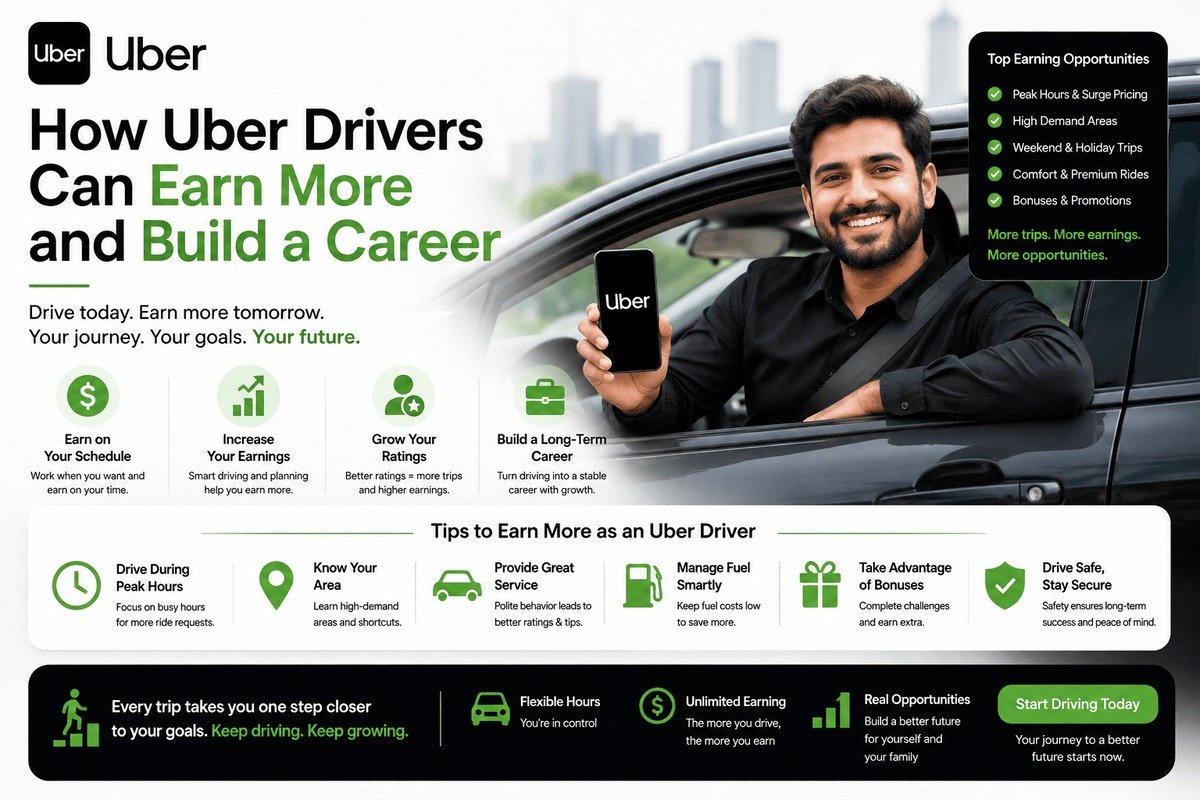
Driving for Uber can provide flexible income, but simply spending more hours on the road does not always mean keeping more money. Fuel, vehicle wear, idle time, and low-demand trips can reduce the value of a long shift. As a result, new drivers may struggle to understand which hours and trips are actually worth their time.
A better approach is to treat driving like a small business. Instead of chasing every request, focus on demand, trip quality, promotions, expenses, and your net earnings. Uber’s current driver tools can help you identify busy areas, promotions, reservations, and other opportunities, while your own records can show which strategies work best in your market.
Understand Where Your Uber Earnings Come From
Uber driver income can come from several sources. Trip fares form the base, while tips and eligible promotions can add to earnings. Depending on location and eligibility, drivers may also have access to different ride or delivery opportunities.
Importantly, earnings vary by city, time, demand, trip type, and how often you drive. Therefore, there is no single hourly amount that every Uber driver should expect.
Uber says its Driver app can show tools such as the rides heatmap, promotions, reservations, and event information. These features can help drivers plan when and where to work rather than driving randomly.
Drive During Better Demand Windows
One of the simplest ways to improve efficiency is to concentrate your driving around periods when riders are more likely to request trips.
For example, commute periods, busy weekends, airport activity, and large local events may create stronger demand. However, the best schedule depends on your city. A time that works well in one market may be much weaker in another.
Instead of assuming a particular schedule is profitable, track your own results. Compare your earnings during different time blocks and note how much time you spend waiting between trips.
Over time, this creates a personal driving schedule based on evidence rather than guesswork.
Use Uber’s Earning Tools Strategically
The Driver app provides several tools that can help drivers make better decisions.
The heatmap can show areas with higher activity and potential surge opportunities. Promotions such as Quest and Boost+ may provide additional earnings when specific conditions are met. Reservations can also help drivers plan around scheduled trips.
However, a promotion is not automatically profitable. If completing a target requires excessive driving, extra fuel, or long unpaid repositioning, the bonus may not improve your actual profit.
For this reason, consider the complete trip rather than looking only at the advertised bonus.
Focus on Net Income, Not Just Gross Pay
Gross earnings can look impressive while your actual profit remains low.
A driver should consider fuel, maintenance, insurance, cleaning, parking, tolls that are not reimbursed, and vehicle depreciation when evaluating the value of a shift. Those costs can make a major difference over time.
One useful habit is to record:
total earnings,
tips and promotions,
hours online,
miles driven,
fuel costs,
other driving expenses.
Then compare your net earnings per hour across different shifts.
For example, a shorter shift with strong demand and fewer empty miles may be more valuable than a much longer shift with constant waiting. Therefore, the goal should not always be to drive more. Instead, the goal is to make each driving hour more productive.
Build a Sustainable Driving Career
For someone who wants to drive regularly, consistency matters more than one unusually good day.
Start by finding the hours and areas that perform well in your market. Next, create a realistic weekly schedule. In addition, keep your vehicle clean, maintained, and ready for work because your car is one of the main tools behind your income.
Good rider service also matters. A clean vehicle, safe driving, respectful communication, and a professional experience can help create better interactions with passengers. Tips are voluntary, so they should never be treated as guaranteed income.
Finally, review your numbers regularly. If fuel costs rise or demand changes, adjust your schedule. If a particular area produces too much unpaid driving, test another location. In practice, building a rideshare career means learning from your own data and improving your decisions over time.
For current information about how Uber calculates driver earnings and which earning opportunities may be available, see Uber’s official U.S. driver earnings guide.
Frequently Asked Questions
How can Uber drivers earn more money?
Drivers can focus on higher-demand periods, use eligible promotions, consider reservations, reduce unnecessary empty miles, and track net earnings instead of only gross fares. Availability varies by market.
What is the best time to drive for Uber?
There is no universal best time. Demand depends on your city, day, events, and local travel patterns. Use the Driver app and your own earnings records to identify productive periods.
Can Uber driving become a full-time career?
It can be used as a regular income source, but earnings and expenses vary significantly by market. Anyone considering full-time driving should calculate realistic net income and vehicle costs before relying on it as their main source of income.
Should drivers focus on more trips or higher-value trips?
Neither approach works in every market. The better goal is productive time. A driver should consider fare value, travel distance, waiting time, fuel, and the likelihood of getting another trip after the drop-off.